
SMSF Commercial Property Loans
Buy commercial property through your self-managed super fund
Soren Financial helps SMSF trustees across Australia compare commercial property loans from more than 20 lenders — to purchase business premises, offices, warehouses, retail properties, industrial units and other commercial real estate through their super.
Whether you’re buying your first commercial investment, purchasing the premises your own business trades from, or refinancing an existing SMSF loan, our commercial brokers can help you structure the right finance and work alongside your accountant and solicitor to get it settled.
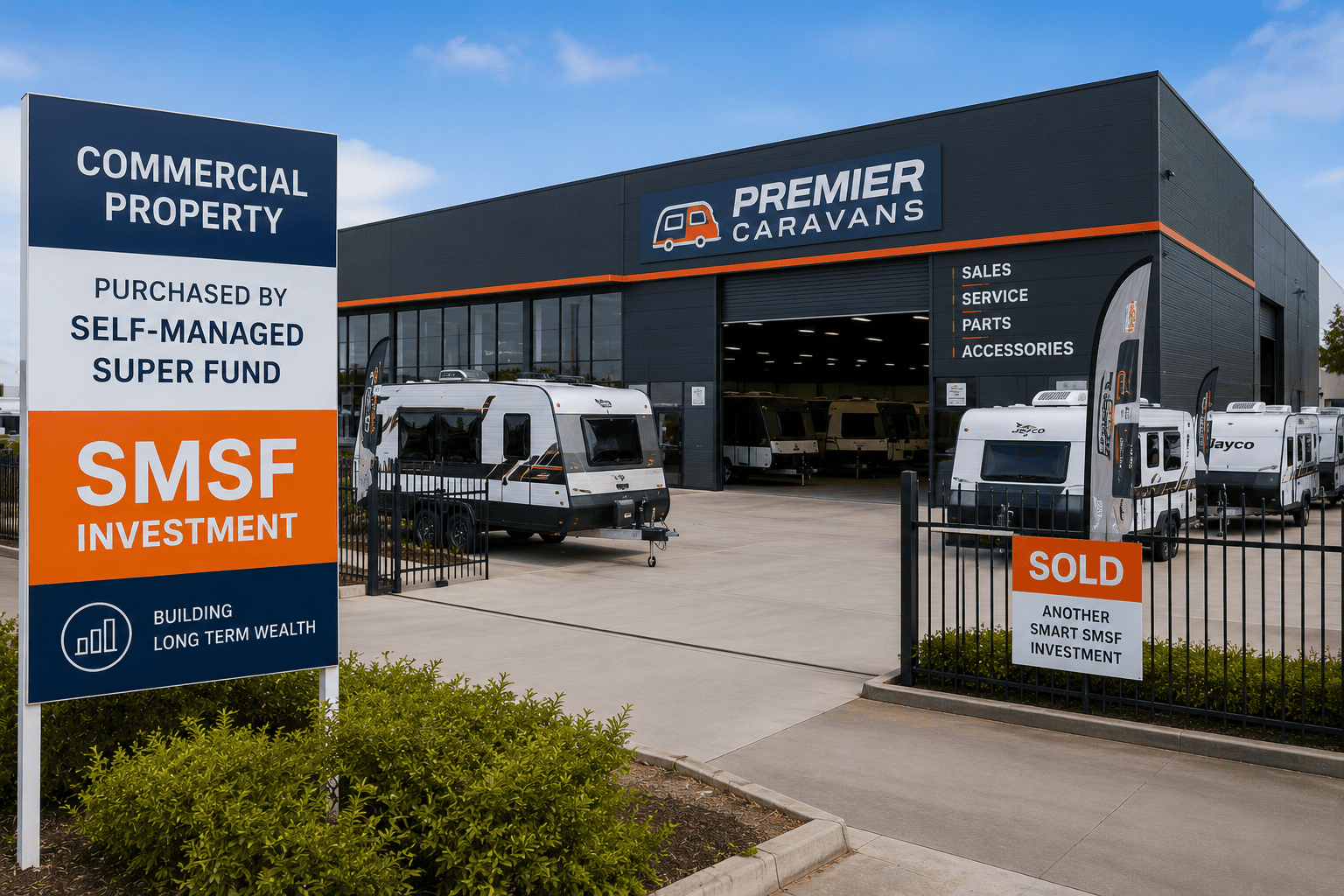
SMSF commercial property loans at glance
SMSF commercial property loans | |
Suitable for | Offices, warehouses, retail shops, industrial properties, medical suites, childcare centres and other commercial real estate meeting the business real property test |
Maximum loan size | Up to $10 million+ (varies by lender) |
Maximum LVR | Typically 70–80% |
Loan term | Up to 30 years |
Interest rates | From 6.80% p.a.* |
Repayments | Principal and interest, or interest-only (lender dependent) |
Loan structure | Limited Recourse Borrowing Arrangement (LRBA) |
Security | The commercial property only |
Minimum SMSF balance | Typically $200,000–$250,000 |
*Rates vary depending on the lender, property type, LVR, and SMSF circumstances.
2026 LRBA changes: What they mean for commercial property
From 10 August 2026, SMSFs can no longer enter into a new limited recourse borrowing arrangement to acquire residential property. The change came through the Treasury Laws Amendment (Tax Reform No. 1) Act 2026, which received Royal Assent on 26 June 2026.
For trustees looking at commercial property, the practical position is this:
- Commercial borrowing continues. New LRBAs over real property are now limited to assets meeting the business real property definition in section 66 of the SIS Act. Genuine commercial premises used wholly and exclusively in a business generally qualify.
- Existing arrangements are grandfathered. If your fund already holds an LRBA, nothing changes. There is no forced sale and no restructure required.
- Refinancing remains available for existing arrangements, within limits.
- Contracts signed before 10 August 2026 are protected, even where settlement falls after that date.
- Not every non-residential property automatically qualifies. Because the restriction now leans on a definition originally written for related-party acquisition and leasing rules, there are edge cases. Mixed-use property, vacant land, hobby farms and lifestyle blocks are the holdings most likely to fall outside it, and the treatment of off-the-plan or newly constructed commercial premises is still awaiting further guidance.
If your fund is considering a purchase that sits near any of those edges, the eligibility question needs answering before you sign, not at finance approval.
What is an SMSF commercial property loan?
An SMSF commercial property loan allows a self-managed super fund to borrow to purchase commercial real estate through a Limited Recourse Borrowing Arrangement (LRBA).
The structure lets trustees hold commercial property inside the fund while using leverage to do it, so the fund isn’t limited to what it can buy outright in cash.
It’s a particularly common strategy among small business owners, who use the fund to buy the premises their business operates from and then pay commercial rent back into their own super. Any arrangement involving fund members or related parties — buying from them, or leasing back to them — must be conducted at genuine market value.
What commercial property can an SMSF buy?
An SMSF can borrow to purchase business real property: land or buildings used wholly and exclusively in the running of a business.
Commonly eligible property includes:
- offices and professional suites
- warehouses, factories and industrial units
- retail shops and strata-titled commercial premises
- medical and allied health consulting rooms
- childcare centres
- farming land used in a genuine primary production business
An SMSF can’t borrow to acquire residential property, and fund members, their relatives or associates can’t live in or privately rent a property held by the fund.
The business real property test is where deals fail
The label on the title matters less than the actual use. Property that is only partly used in a business, vacant land held for future development, hobby farms and lifestyle blocks frequently fall outside the definition, and since 10 August 2026 that test governs whether the fund can borrow at all, not just whether it can buy from a related party.
Every commercial property held by an SMSF must also satisfy the sole purpose test: the fund must be maintained solely to provide retirement benefits to its members, and every financial benefit from the property must flow back to the fund.
How SMSF commercial property loans work
- The fund contributes the deposit. Cash held in the SMSF covers the deposit, stamp duty and legal costs.
- A holding trust is established. A separate property trust — a bare trust or holding trust — is set up to hold legal title to the property for the duration of the loan. All income and expenses relating to the property run through this structure.
- The fund borrows the balance. The loan is made to the SMSF, not to a member personally.
- Recourse is limited to the property. This is the defining feature of an LRBA. If the loan defaults, the lender’s claim is limited to the property securing that loan — the fund’s other assets are protected. This is why the structure is called limited recourse.
- The fund services the loan. Repayments must come from the fund’s own cash reserves — typically rental income from the property plus ongoing concessional and non-concessional contributions.
- Title transfers on payout. Once the loan is repaid, the property can be transferred from the holding trust into the SMSF directly.
Eligibility criteria
Lender requirements are tighter than standard commercial lending. Expect:
- a deposit of 20–30% of the property value (70–80% LVR)
- a minimum SMSF balance of $200,000–$250,000
- retained liquidity of 5–10% of the loan amount to cover ongoing expenses
- a corporate trustee, rather than individual trustees
- a documented investment strategy supporting the acquisition
- evidence of serviceability, including contribution history, rental income and credit checks
- satisfaction of the sole purpose test and the business real property test
Compliance doesn’t end at settlement. The fund must remain compliant with both the loan terms and superannuation law for the life of the arrangement, with annual audits confirming it.
SMSF commercial property loan FAQs
Can an SMSF still borrow to buy commercial property?
Yes. The 2026 reforms ended new LRBAs for residential property from 10 August 2026, but SMSFs can still borrow to acquire property that meets the business real property definition. Genuine commercial premises used wholly and exclusively in a business generally qualify.
What is an LRBA?
An LRBA is a Limited Recourse Borrowing Arrangement — the only structure through which an SMSF can borrow to acquire a single asset, such as a commercial property or a parcel of shares. If the fund defaults, the lender’s claim is limited to that asset alone, and the fund’s remaining assets are protected.
What deposit do I need for a commercial property loan through my SMSF?
Generally 20–30% of the property value. The fund also needs to cover stamp duty and legal fees from its own cash, and most lenders require a retained liquidity buffer of around 10% of the property value for ongoing and unexpected costs.
Can my business lease the property?
Yes. In fact, this is one of the most common reasons business owners use the structure. The lease must be at genuine market rent and documented on commercial terms, so the fund isn’t disadvantaged. Lenders will typically want to see the business trading profitably for at least two years.
Can I refinance an existing SMSF commercial loan?
Yes, you can refinance an existing SMSF commercial loan if your goal is to change lenders, reduce fees, or access a better interest rate. However, the new loan cannot exceed the existing balance, must remain under an LRBA, and must use the same holding trust. You can’t release equity to take cash out or fund another purchase.
Why choose Soren Financial?

Soren Financial is home to a team of highly experienced and skilled brokers. We offer:
- access to 20+ commercial lenders
- commercial property, business and development finance specialists
- tailored lending structures for complex scenarios
- experienced with owner-occupied, investment and SMSF lending
- end-to-end support from strategy through to settlement.
Find out more about how we can help you navigate the complexities of securing an SMSF commercial property loan. Contact us today.