
Property Development Finance
Property development finance funds commercial builds, land subdivisions and multi-dwelling projects across Australia. Unlike a standard home loan, a development loan is assessed on the project itself — its feasibility, its yield and its profit margin — rather than on your income alone.
Soren Financial’s commercial brokers compare development finance options from more than 20 lenders, including major banks, second-tier lenders and private funders, to structure a facility that matches your project’s timeline, cost base and exit strategy.
Not sure how lenders will assess your deal? Answer a few quick questions and see which commercial loan options could suit you.
We compare residential and commercial property development loans
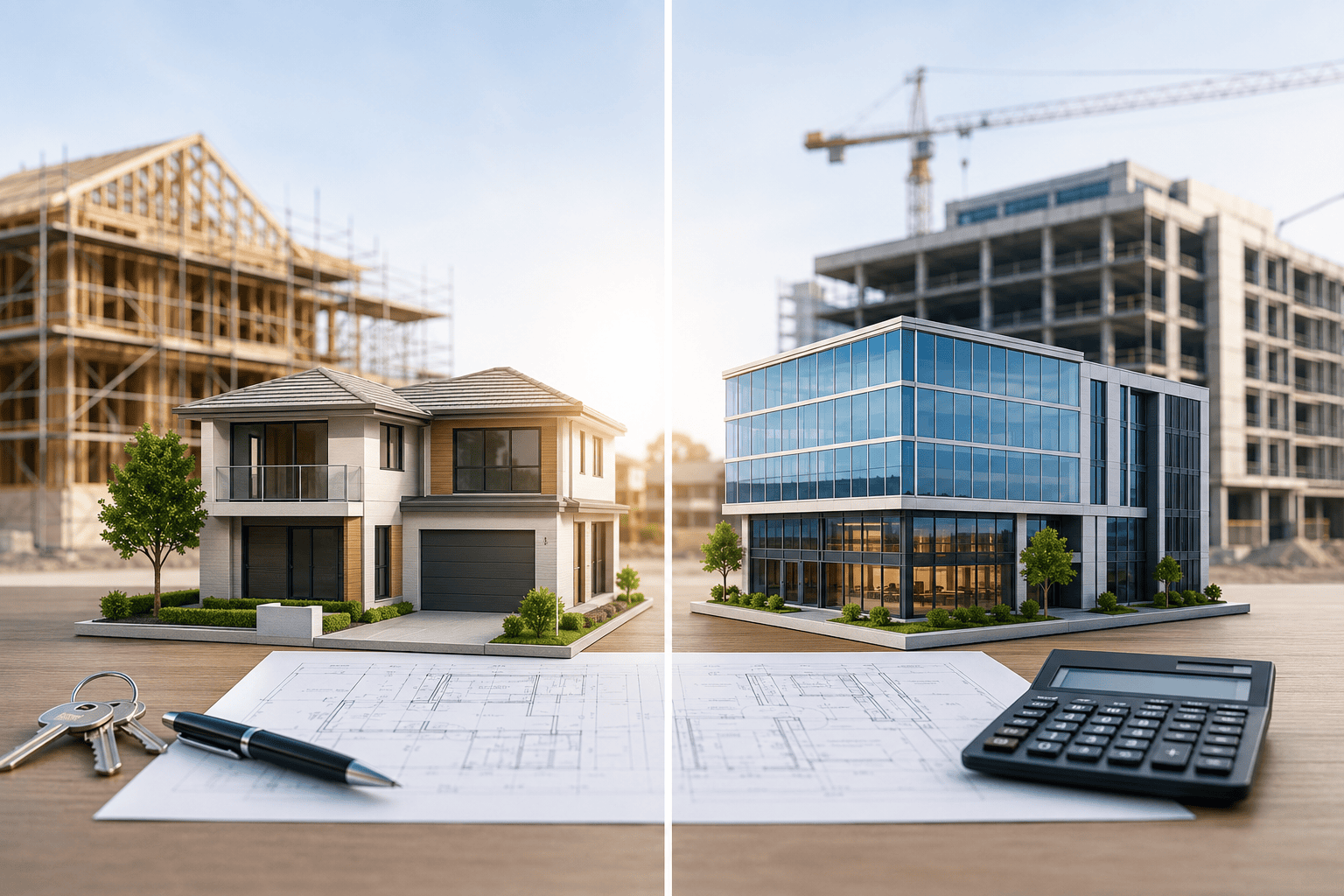
Our brokers assess which loan type suits your project, weighing structure, cost, drawdown schedule and pre-sale requirements against your delivery timeline.
Residential development loans | Commercial development loans | |
Suitable for | Up to four dwellings on a single title | Multi-unit residential, apartment buildings, offices, retail centres, warehouses, industrial facilities and mixed-use developments |
Maximum LVR | Up to 80% of the completed property value (subject to lender criteria) | Typically up to 60–75% of the completed property value |
Loan term | 12–24 months during construction, then convertible to a term loan of up to 30 years | 12–36 months, with refinance or sale at completion |
Interest rates | From 7.70% p.a.* | From 8.50% p.a.* |
Repayments | Interest-only or capitalised during construction, then principal and interest | Interest-only or capitalised during construction, repaid at exit |
Funding structure | Progressive drawdowns against construction milestones | Progressive drawdowns against certified construction stages |
Pre-sales | Often not required for smaller developments | Many lenders require pre-sales or pre-lease commitments covering 60–100% of the debt, although specialist lenders may be more flexible |
*Rates vary depending on the lender, loan amount, LVR and borrower profile.
Types of property development finance we arrange
Development site acquisition loans
Finance to purchase vacant land or a redevelopment site before construction begins. Lenders typically fund up to 55–65% of the land value, with the balance covered by your equity contribution.
Construction finance
Funding for the build phase, released progressively as each certified stage completes. Interest is usually capitalised into the facility rather than paid monthly, preserving cash flow through construction.
Land banking finance
Loans for developers and investors acquiring land to hold for future development or capital growth. Because there is no near-term income, these facilities generally require a lower LVR and a clearly documented holding strategy.
Residual stock finance
Finance secured against completed but unsold residential or commercial units. This releases equity from finished stock, repays the construction facility and gives you time to sell into a stronger market rather than discounting to meet a deadline.
Bridging finance
Short-term funding covering the gap between purchasing a development site and refinancing or selling an existing asset.
Private and non-bank development finance
Where a project falls outside major-bank criteria, like limited pre-sales, a compressed settlement timeline, or a first-time developer profile. Private and non-bank lenders can offer faster approvals and more flexible conditions, at a higher cost of funds. We compare both channels so you can weigh speed against price.
How to apply for development finance
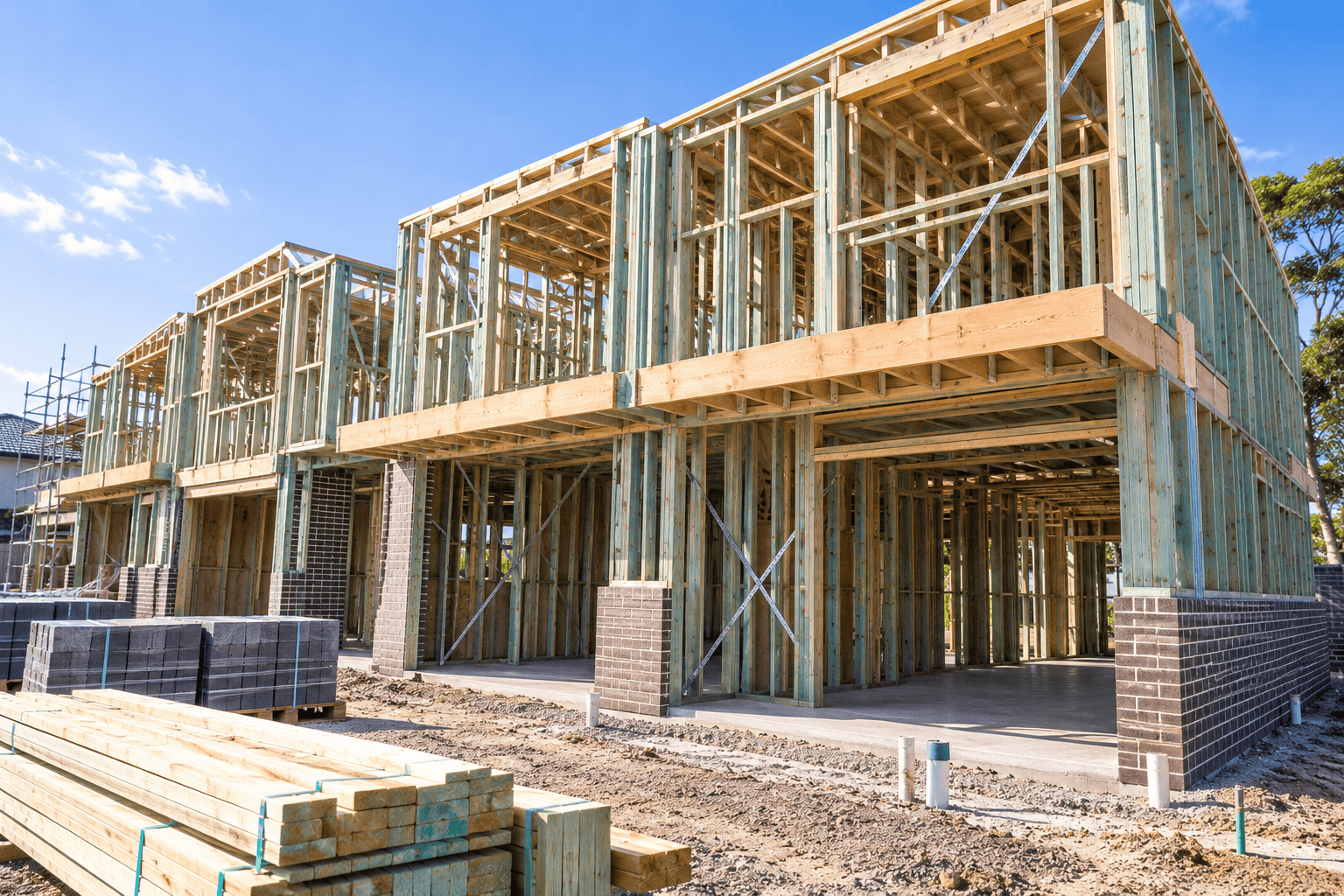
Development lending has tightened in recent years, with lenders becoming more selective and more document-driven. Understanding what a credit team needs before you apply is the single biggest factor in how quickly your application moves.
Typical commercial development finance terms
Working with Australian banks and lenders, a commercial development facility generally involves:
- a facility term of 12–36 months
- pricing set at a reference rate plus a margin, typically in the range of 1.5–3.5% for bank-funded facilities
- a loan-to-cost ratio (LCR) of 70–80% of total development cost
- a loan-to-value ratio (LVR) of 60–70% of gross realisation value
- an equity contribution of 20–30% of total development cost, which may include the value of land already held.
Residential development facilities for smaller projects are assessed more like a construction home loan, with LVRs up to 80% and the option to convert to a term loan of up to 30 years on completion.
How staged drawdowns work
Most development finance operates on a staged drawdown model. Funds are released progressively as the project reaches defined milestones, rather than as a single lump sum. Drawdowns typically align with:
- Land settlement
- Site establishment and earthworks
- Slab or foundation completion
- Frame and roof
- Lock-up
- Practical completion
Each drawdown is usually released only after a quantity surveyor certifies that the stage is complete and that the remaining budget is sufficient to finish the project. This is known as a ‘cost-to-complete’ test.
Documentation required for development finance
Lenders require extensive evidence that the project stacks up. You will generally need:
- A full feasibility study covering project costs, revenue expectations and profit margin. Most lenders look for a minimum profit-on-cost of 15–20%.
- Market analysis supporting your revenue assumptions and expected absorption rates.
- Project approvals, including development approval, council planning permits, stamped building plans and any environmental compliance certification.
- A fixed-price building contract with a licensed, appropriately insured builder.
- Developer and builder profiles, including CVs evidencing relevant project experience for the developer, builder and project manager.
- An independent quantity surveyor’s report assessing construction costs and the drawdown schedule.
- Insurance certificates, including contract works, public liability and professional indemnity where applicable.
- Full financials for the borrowing entity, whether it’s a trust, company or individual — including a statement of position, entity details, recent tax returns and credit history.
- An exit strategy, documenting how the facility will be repaid: sale of completed stock, refinance to a term facility, or a combination of both.
How long approval takes
Timeframes depend on the lender and on how complete your application is at lodgement:
- Private and non-bank lenders: often 2–4 weeks, sometimes faster for straightforward transactions
- Major and second-tier banks: typically 6–12 weeks, reflecting deeper credit assessment and valuation requirements
Applications with an incomplete feasibility, missing approvals or an unresolved builder appointment are the most common cause of delay.
Property development finance FAQs
What’s a property development loan?
A property development loan is a type of residential or commercial property loan designed to fund land purchases and new construction projects. It can be used for residential, commercial, or mixed-use developments.
Where a home loan is assessed on an individual’s income and accommodation needs, a development loan is assessed on the commercial viability of the project, including its costs, its end value and its profit margin.
How much can I borrow for a development project?
Borrowing capacity depends on the project’s feasibility and your equity position. As a general guide, lenders fund up to 55–65% of land value for a site acquisition, and up to 70–80% of total development cost for construction, capped at 60–70% of gross realisation value. Smaller residential projects of up to four dwellings may access up to 80% of completed value.
Are there other costs to development finance?
Beyond interest, development facilities carry costs that are easy to underestimate at feasibility stage:
- establishment or application fee, commonly 0.5–2% of the facility limit
- line or facility fee charged on the limit rather than the drawn balance
- valuation and quantity surveyor fees, including progress inspections at each drawdown
- legal and documentation costs, typically borne by the borrower
- exit or early repayment fees, depending on the lender.
Interest is usually capitalised during construction, meaning it accrues against the facility rather than being paid monthly. Your feasibility should include capitalised interest as a project cost.
Do I need pre-sales to get development finance?
Bank lenders commonly require pre-sales or pre-lease commitments covering 60–100% of the debt on larger projects, as evidence of demand and to de-risk the exit. Facilities without pre-sales are achievable, usually through private or non-bank lenders, and typically where the developer has a strong track record, a lower LVR or a higher profit-on-cost margin. Smaller residential developments often require no pre-sales at all.
Can first-time developers get development finance?
Yes, though the terms are usually tighter. Without a track record of delivered projects, first-time developers should expect to contribute a larger equity share, provide more detailed financial documentation, and appoint an experienced builder and project manager whose CVs can carry the experience requirement. Starting with a smaller project builds the profile that unlocks better terms later.
What can development finance be used for?
Development finance supports a wide range of projects, including:
- duplexes and dual occupancies
- townhouse developments
- apartment buildings
- land subdivisions
- mixed-use developments
- commercial offices
- retail centres
- industrial and warehouse developments
What happens when construction is complete?
You repay the facility through your exit strategy, usually sale of the completed stock, or refinance into a longer-term commercial or investment loan if you intend to hold the asset. Where stock remains unsold, residual stock finance can repay the construction facility and give you time to sell without discounting.
Why use a broker for development finance?
Development lending is document-heavy and criteria vary widely between lenders. An experienced broker helps you assemble a credit-ready application, structure the facility around your drawdown and exit timeline, and understand the covenants you will be held to through the build.
A broker also brings lender relationships across banks, second-tier and private funders, which matters most when a project sits just outside major-bank criteria and would otherwise be declined rather than restructured.
Why choose Soren Financial?

At Soren Financial, our finance specialists are industry experts. We offer:
- access to 20+ commercial lenders
- commercial property, business and development finance specialists
- tailored lending structures for complex scenarios
- experience with owner-occupied, investment and SMSF lending
- end-to-end support from strategy through to settlement.
We listen closely to your goals. We identify your needs, and we find the right loan package to make your project vision a reality. Get in touch today.