
The Federal Budget 2026 has reshaped several parts of Australia’s tax and investment system, with property investors squarely in the firing line.
The biggest changes centre around Capital Gains Tax, negative gearing and discretionary trusts, while workers and small businesses are also set to receive a mix of tax relief measures and incentives over the coming years.
For investors, particularly those holding established residential property, the Budget signals a clear policy shift. Future tax concessions will increasingly favour new housing construction over existing dwellings, while long-standing strategies used to reduce taxable income are gradually being wound back.
Here’s a closer look at the key measures announced in the Australia Federal Budget 2026.
Capital Gains Tax changes from 2027
One of the most consequential announcements in the Federal Budget was the overhaul of Capital Gains Tax treatment for assets held longer than 12 months.
From 1 July 2027, the existing 50% CGT discount will be replaced with a CPI indexation model, alongside a minimum 30% tax rate on capital gains.
Investors purchasing newly built properties will still have the option to choose between the current 50% CGT discount or the new indexed system.
Importantly, the changes are only partially grandfathered.
Any capital growth accumulated before 1 July 2027 will still qualify for the current 50% CGT discount. Gains made after that date, however, will fall under the new inflation-indexed framework.
Under the current system, investors holding assets longer than 12 months typically receive a 50% discount on their taxable capital gain.
From July 2027, that structure changes to:
- removal of the 50% CGT discount
- CPI indexation applied to the asset cost base
- minimum 30% tax rate on capital gains
How the new CGT indexation model works
The shift to inflation indexation changes how taxable gains are calculated.
Rather than automatically discounting 50% of the gain, the original purchase price of the asset will instead be adjusted in line with inflation using the Consumer Price Index (CPI).
For investors with modest capital growth, particularly where gains broadly track inflation, the tax impact may be less severe. Investors sitting on substantial long-term gains, however, are likely to pay more tax than they would under the current system.
For example:
- Purchase price: $500,000
- Sale price after 10 years: $1,000,000
- Total capital gain: $500,000
Under the current rules, applying the 50% CGT discount would reduce the taxable gain to $250,000.
Under the new model, the original purchase price would first be indexed to inflation.
If inflation over that period was 20%, the indexed cost base would increase from $500,000 to $600,000.
That would produce:
- Sale price: $1,000,000
- Indexed cost base: $600,000
- Taxable capital gain: $400,000
In practical terms, the investor would be taxed on $400,000 rather than $250,000.

Negative gearing to be restricted on established properties
The Federal Budget also confirmed major changes to negative gearing.
From 1 July 2027, investors purchasing established residential properties will no longer be able to offset rental losses against wage or business income.
Instead, those losses will only be able to offset future rental profits or capital gains generated from residential property investments. Any excess losses can still be carried forward into future financial years.
Properties purchased before Budget Night on 12 May, including contracts already exchanged but not yet settled, will remain exempt from the changes until sold.
The Government has preserved full negative gearing concessions for:
- newly built residential properties
- build-to-rent developments
- properties held within widely held trusts
- superannuation funds
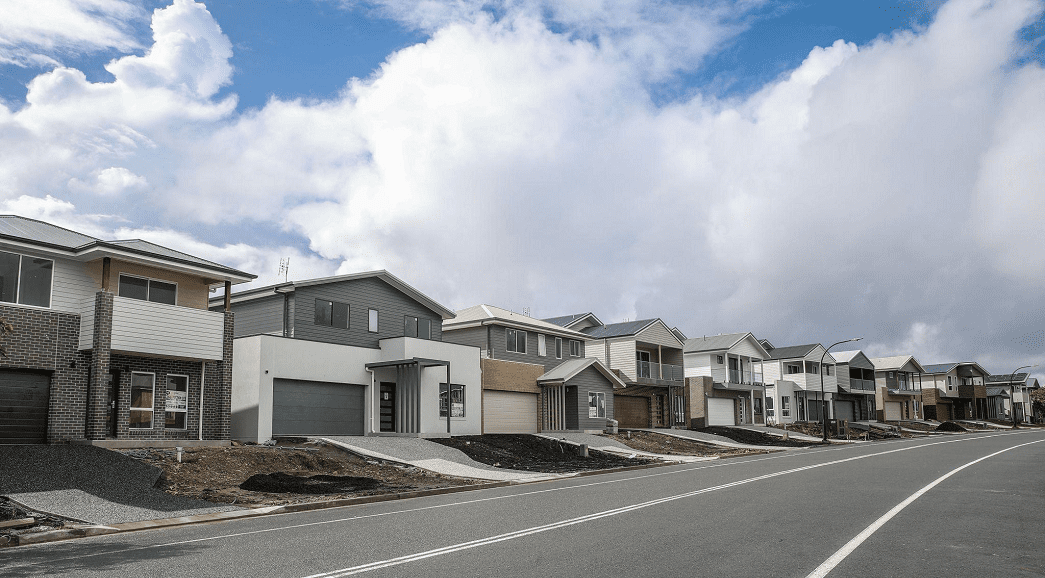
The direction here is fairly clear. Future tax incentives are being steered toward new housing supply rather than existing stock.
That could reduce investor demand for established dwellings over time, particularly if reduced negative gearing benefits are combined with less favourable CGT treatment.
Housing and infrastructure commitments
Alongside the investment tax changes, the Government has committed additional funding toward housing supply and first-home buyer initiatives.
A new $2 billion Local Infrastructure Fund will be used to accelerate enabling infrastructure such as roads, utilities and sewerage to support new housing developments.
The Government expects the initiative to help deliver 65,000 additional homes over the next decade.
An additional $5.9 billion will also be allocated to states and territories as part of the 100,000 Homes for First Home Buyers program.
The temporary ban on foreign buyers purchasing established homes has also been extended until 30 June 2029.
Discretionary trusts face minimum tax rate
Discretionary trusts will also be affected under the Federal Budget reforms.
From 1 July 2028, trustees distributing income through discretionary trusts will be subject to a minimum 30% tax rate, although transitional relief measures will apply.
Beneficiaries, excluding corporate beneficiaries, will receive non-refundable tax credits for tax already paid by the trustee.
The Government has also introduced expanded rollover relief for three years from 1 July 2027, allowing small businesses and other entities to restructure out of discretionary trusts into alternative structures such as companies or fixed trusts.
For many advisers, accountants and investors who have historically used discretionary trusts for income distribution flexibility, this is likely to trigger a broader review of existing ownership structures.

Instant asset write-off made permanent
Small businesses received some certainty in the Budget through the permanent extension of the $20,000 instant asset write-off.
Businesses with turnover of up to $10 million will continue to be able to immediately deduct eligible new or second-hand assets costing less than $20,000.
Tax cuts and cost-of-living measures
The Budget also included several measures aimed at easing household cost pressures.
$1,000 instant deduction for work expenses
Australians will be able to claim a $1,000 instant tax deduction for eligible work-related expenses in the 2026-27 financial year without requiring receipts.
The deduction can be claimed in this year’s tax return.
$250 Working Australians Tax Offset
From the 2027-28 financial year, eligible workers will also receive a new $250 Working Australians Tax Offset.
More than 13 million Australians are expected to benefit, although taxpayers will need to wait until lodging their 2027-28 tax return after 1 July 2028 before receiving the offset.
Lower marginal tax rate from July 2026
The lowest marginal tax rate will reduce from 16% to 15% from 1 July 2026 for incomes between $18,201 and $45,000.
While initially announced in the 2025 Federal Budget, the measure formally takes effect this year.
Electric vehicle FBT concessions scaled back
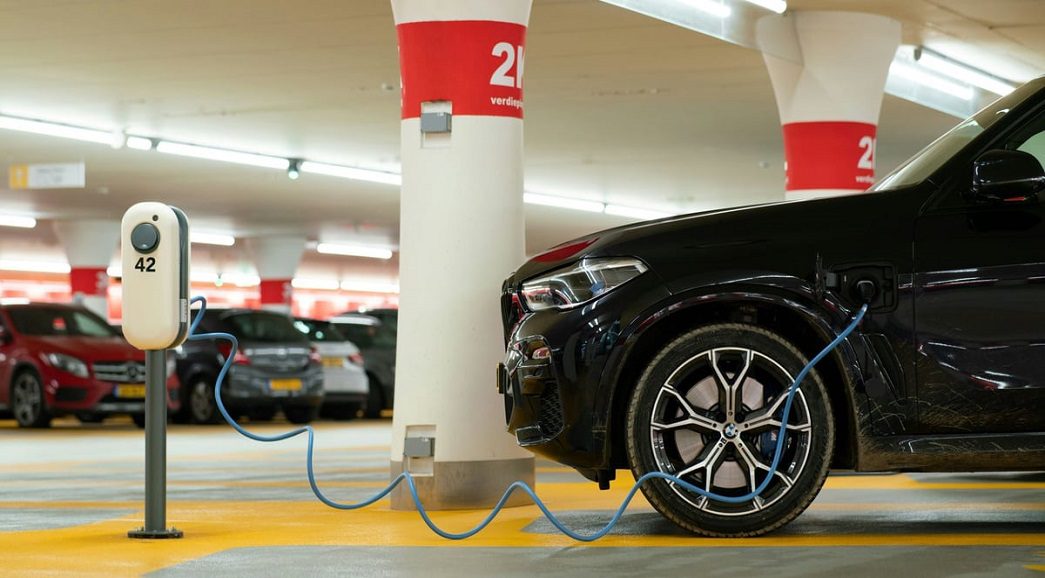
Electric vehicle tax concessions will remain in place, although the current full exemption model is gradually being reduced.
Eligible EVs priced up to $75,000 will continue receiving a full Fringe Benefits Tax exemption where the arrangement begins before 1 April 2029.
From 1 April 2027:
- EVs above $75,000 will move to a permanent 25% FBT discount instead of a full exemption
From 1 April 2029:
- all eligible EVs will move to the reduced 25% FBT discount structure
What the Federal Budget 2026 signals overall
Taken together, the Australia Federal Budget 2026 marks a clear pivot in tax policy.
Long-standing investor concessions tied to established residential property are being narrowed, while incentives linked to new housing supply, infrastructure and construction are being preserved or expanded.
For investors, business owners and higher-income Australians, the next two years will likely involve reassessing structures, tax strategies and long-term asset planning well before the 2027 changes take effect.
About the author

Mansour Soltani
Director, Soren Financial
Mansour leads Soren Financial, working with clients across home loans, refinancing and property investment. A regular media contributor to ABC, Domain and Australian Broker, he holds a Certificate IV and Diploma in Finance and Mortgage Broking.
View full profile →