
Interest rate rises, inflation and your borrowing capacity: 3 things to know in 2026
In Summary:
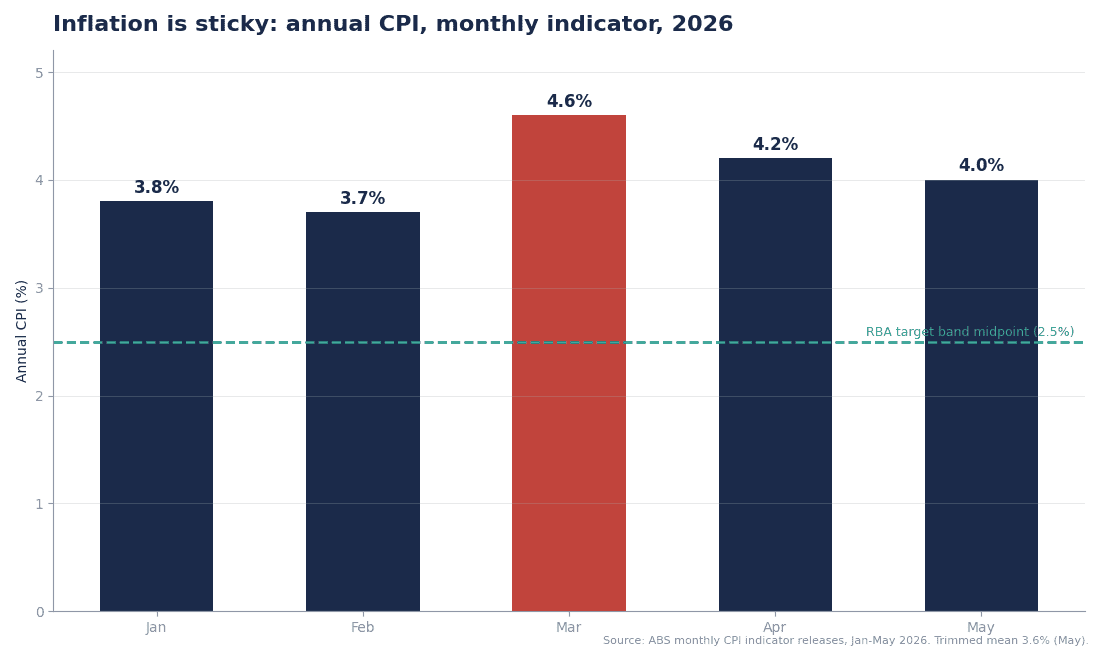
- Inflation is back at 4% and the electricity rebates are gone, power bills are up 13% in a year
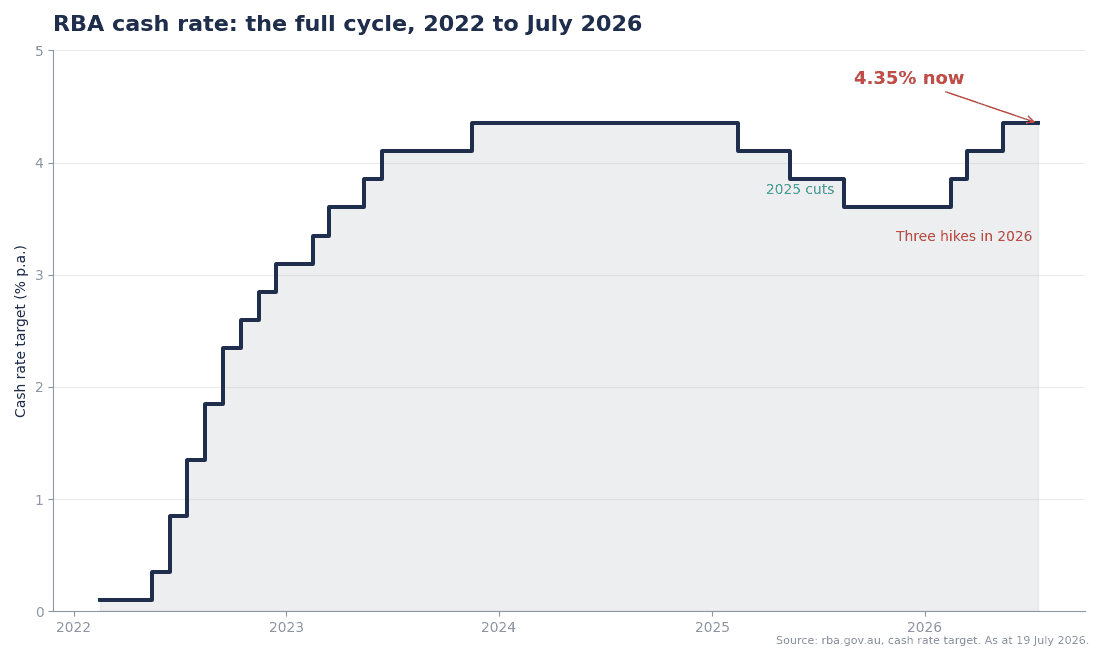
- The RBA has lifted the cash rate four times this year to 4.60%, and every hike quietly trims your borrowing capacity
- My weekly grocery shop is now big enough to need its own loan application
So what does this all mean for us all? I am getting the same nervous calls and emails I was getting back in 2022, households watching their budgets get squeezed from both ends: prices going up at the checkout, repayments going up on the loan, and quietly in the background, their borrowing capacity shrinking with every rate rise. I am not an economist so I won’t lecture you on inflation, but on rates, let me remind you of something I said back then: the days of 1.99% are over and they are not coming back. Everyone needs to let it go.
Want to know what the current rate cycle actually does to your numbers? Reach out at startnow@sorenfinancial.com and we will run them with you.
Take a look at your income vs debt
When you are assessing whether you should be taking on debt, looking at your repayments you need to ask yourself: are you willing to sacrifice short term pain for long term gain?
When you are running your figures on a loan servicing calculator, run them at the rate the bank will actually test you at, not the advertised rate. Variable rates are sitting at just over 6% right now, and APRA requires the banks to assess you at your rate plus a 3% buffer. That is roughly a 9% stress test. If your budget survives that, you are safe.
Any period where your actual rate sits below your stress-tested rate should be viewed as cream, use it to make extra repayments. Just because the bank gives you a 30 year loan does not mean you should hold the debt that long, we showed in our post on fixing your home loan how an extra $500 a month takes nearly 8 years off a $600k loan at 6%.
Rate rises are killing your borrowing capacity
We are currently reassessing client approvals that are about to expire, and this is where the four hikes of 2026 really bite. Every 0.25% the RBA adds gets tested against your income with the full APRA buffer on top, so your maximum loan shrinks with each move. If you were approved late last year when the cash rate was 3.60%, your file re-runs very differently at 4.60%.
How much borrowing capacity have the 2026 hikes actually cost you?
Let me put numbers on it, because “rates went up” is abstract until it hits your pre-approval. On a standard 30 year loan, each 0.25% rise trims a bit over 2% off your maximum borrowing capacity once the banks re-run the maths at the higher assessment rate. Stack up the four hikes we have had this year and that is roughly 8-9% of your capacity gone since January. On what would have been an $800k approval, that is in the ballpark of $70k of buying power that has quietly evaporated while people wait for the “right time”.
This is why we tell clients with expiring pre-approvals not to sit on them, and why picking the bottom of the market is harder than it looks: the goalposts move while you wait.
“Everyone’s waiting for prices to fall. What they don’t see is every rate rise quietly shrinking what the bank will lend them – borrowing power falls faster than house prices ever do.”
Mansour Soltani, Director, Soren Financial
And where are rates heading next? Rather than guessing, check the OurTop10 Rate Prediction Index for the current read on the next RBA meeting. With the cash rate now at 4.60% after the 29 September hike, I wouldn’t be banking on your borrowing capacity getting better on its own.
First home buyers trying to pick the bottom of the market
My main concern is for first home buyers waiting for a crash, I have seen this story so many times before (I was one of them back in the day). They sit on their hands betting the suburbs they want will fall further and faster than their borrowing capacity does. That is a mighty punt, and the maths above shows which side usually wins.
The other thing that has changed: the First Home Guarantee no longer has income caps or a cap on places, those were removed in October 2025. A 5% deposit with no LMI is available to far more buyers now, which is great for getting in, but it also means more demand at the price points first home buyers shop in. Get in early to avoid the stampede, or you will end up with slim pickings.
Moral of the story: you cannot control the RBA or the price of electricity, but you can control your loan structure, your buffer and your timing. Get in touch at startnow@sorenfinancial.com and we will show you what your borrowing capacity really looks like in 2026, how the next RBA move changes it, and how to protect it. Knowing your real borrowing capacity before you shop is the single biggest edge a buyer has.
About the author

Mansour Soltani
Director, Soren Financial
Mansour leads Soren Financial, working with clients across home loans, refinancing and property investment. A regular media contributor to ABC, Domain and Australian Broker, he holds a Certificate IV and Diploma in Finance and Mortgage Broking.
View full profile →